Donec efficitur, ligula ut lacinia
viverra, lorem lacus.
Donec efficitur, ligula ut lacinia
viverra, lorem lacus.

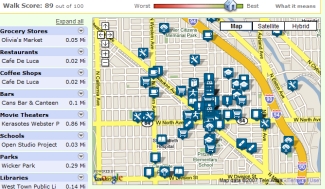 After I came back from living in France for a few months, I had a bit of a culture shock upon returning to the states. At the time I was living with my parents in the suburbs of Chicago and it dawned on me that most US cities (apart from the big ones with an extensive public transit system) are only possible because its inhabitants own cars. Pretty much every simple activity in my daily teenage life required a car: getting to school, going to the supermarket, visiting friends, going shopping, dining out, going to the movies, etc. In France I would walk to school and grab a bite to eat at a coffee shop on the way. On the way home I’d pass cafes and see classmates and I’d find out about an event happening later in the evening. Sometimes I’d join them and we’d watch and comment on other pedestrians. Or I could detour and go through the open air market and score some fresh fruit from the countryside. If I needed an audio component, some socks, a bathing suit, or more comfortable shoes, I could find them by walking 2-10 minutes away from my host’s house. I missed all of that when I returned home.
What’s great about Chicago is its neighborhoods, and that you don’t need a car just to go about your life. Of course some locations are more walkable than others, and now there’s a great tool to figure out where to live if you like to walk, Walk Score.
So why walk? Here’s what the website says:
Walkable neighborhoods offer surprising benefits to our health, the environment, and our communities.
Better health: A study in Washington State found that the average resident of a pedestrian-friendly neighborhood weighs 7 pounds less than someone who lives in a sprawling neighborhood. Residents of walkable neighborhoods drive less and suffer fewer car accidents, a leading cause of death between the ages of 15 – 45.
Reduction in greenhouse gas: Cars are a leading cause of global warming. Your feet are zero pollution transportation machines.
More transportation options: Compact neighborhoods tend to have higher population density, which leads to more public transportation options and bicycle infrastructure. Not only is taking the bus cheaper than driving, but riding a bus is ten times safer than driving a car!
Increased social capital: Walking increases social capital by promoting face-to-face interaction with your neighbors. Studies have shown that for each 10 minutes a person spends in a daily car commute, time spent in community activities falls by 10 percent.
Stronger local businesses: Dense, walkable neighborhoods provide local businesses with the foot traffic they need to thrive. It’s easier for pedestrians to shop at many stores on one trip, since they don’t need to drive between destinations.
And, I’d add, just better quality neighborhoods with a sense of character absent from cloned suburban developments.
Still, some activities require public transportation or a car, and if you live in a city that supports it, I’d recommend iGo, a car-sharing program that I advocate.